.svg)

5 Key Reasons Why Keyword Research is Crucial for Your Success | An Optilinko Insight
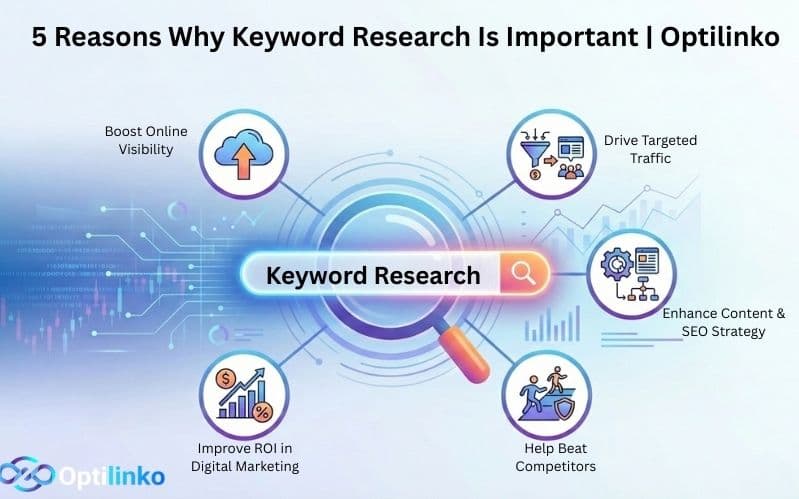
In the realm of digital marketing, keyword research forms the foundation of every SEO strategy. Understanding what keywords your target audience uses to search for products or information is crucial for your online visibility and marketing success. The keyword research definition is the process of identifying and analyzing the terms that people enter into search engines. This process not only helps in optimizing content but also plays a vital role in shaping your overall content marketing strategy. Tools like Optilinko make it easier to discover what truly drives online visibility and engagement.
What Is Keyword Research and Why Does It Matter?
So, why is keyword research important? It connects your content with user intent, ensuring that what you produce resonates with what your audience is searching for. By understanding the importance of keyword research, you can create SEO-optimized websites that rank higher in search engine results pages (SERPs). This understanding enables you to speak your audience's language, enhancing engagement and retention.
Effective keyword research not only identifies high-traffic keywords but also reveals the intent behind those searches. For example, someone searching for "best running shoes" may be in the market to purchase, while another searching "how to choose running shoes" is likely seeking information. Knowing this distinction can significantly enhance your content strategy.
Five Reasons Why Keyword Research Is Important
Reason 1: Boosts Online Visibility

One of the primary benefits of keyword research is its capability to boost online visibility. By identifying the right keywords, businesses can optimize their content for search engines. It also allows them to reach their target audience organically. This organic reach is fundamental in a world where paid advertising can be costly and competitive.
Optilinko offers keyword visibility metrics, enabling users to see how well their chosen keywords perform in terms of search engine rankings. This feature lets marketers refine their strategies based on real-time data, ensuring they maintain an optimal digital presence.
Reason 2: Drives Targeted Website Traffic
Choosing the right keywords can significantly drive targeted website traffic. When you align your content with the search intent behind the keywords, you attract qualified leads who are more likely to convert. This makes understanding search intent a crucial aspect of keyword research.
Moreover, we provide tools that identify high-traffic yet low-competition keywords. By leveraging this data, marketers can target keywords that offer the best potential for attracting visitors while minimizing competition. This strategic technique results in higher conversion rates and increased ROI.
Reason 3: Enhances Content Marketing & SEO Strategy
Keyword research is pivotal in aligning content marketing with SEO strategy. By utilizing keyword insights, marketers can effectively plan blog calendars, develop landing pages, and create marketing campaigns that resonate with their audience.
For example, a content strategist can use keyword research to identify trending topics related to their industry. They can improve their chances of ranking higher in SERPs by integrating these keywords into their strategy. Just to enhance their overall online visibility.
Reason 4: Helps Beat Competitors
Understanding your competitors' keyword strategies is another crucial element of keyword research. By conducting competitor keyword analysis, businesses can gain insight into what keywords their competitors are targeting and how well they are performing.
We offer a powerful competitor analysis feature that allows users to examine their rivals' keyword strategies. This information can be invaluable for developing your own keyword strategy, ensuring you stay one step ahead in the competitive landscape.
Reason 5: Improves ROI in Digital Marketing
Focusing on relevant, profitable keywords can optimize marketing and strategy efforts, ultimately improving ROI. By targeting keywords that have proven to convert, businesses can allocate their resources more efficiently.

With Optilinko, users can track keyword performance, trends, and search volume over time. This capability allows for data-driven decision-making, ensuring that marketing efforts remain focused on high-impact strategies that deliver results.
Tips for Keyword Research
To maximize the benefits of keyword research, consider these actionable tips:
-
Focus on User Intent: Understand the reasons behind search queries to better align your content.
-
Utilize Long-Tail Keywords: These are often less competitive and can attract a more targeted audience.
-
Analyze SERP Features: Study the features on search results pages to identify opportunities for visibility.
-
Leverage Keyword Tools: Use tools like Optilinko to streamline your keyword analysis and uncover valuable insights.
Conclusion: Start Your SEO Journey with Optilinko
In a nutshell, the importance of keyword research cannot be overstated. It is the cornerstone of effective SEO and content marketing strategies that drive long-term growth and visibility. By leveraging tools like Optilinko, marketers can discover profitable keywords, track performance, and ultimately succeed in the competitive digital landscape.
From finding profitable keywords to tracking performance across multiple projects, Optilinko provides marketers with everything they need to succeed in SEO. Start your SEO journey today and see how comprehensive keyword research can transform your digital marketing strategy.
FAQs on Keyword Research and Its Importance
Keyword research identifies the terms users search for, helping businesses optimize content to drive traffic and improve visibility.
It aligns conte
It matches content with search intent, attracting qualified leads likely to convert.
Tools like Optilinko provide metrics on keyword performance, visibility, and competition.
It helps create content that resonates with users, aligning with their search queries and trends.
Analyzing competitors' keywords reveals opportunities to outperform them in search rankings.
Long-tail keywords are specific, low-competition phrases that attract targeted traffic.
Tools like Optilinko track keyword performance, search volume, and trends over time.
User intent is the purpose behind a search, and aligning content with it boosts engagement and rankings.
By targeting profitable keywords, businesses can optimize marketing efforts and improve conversion rates.